
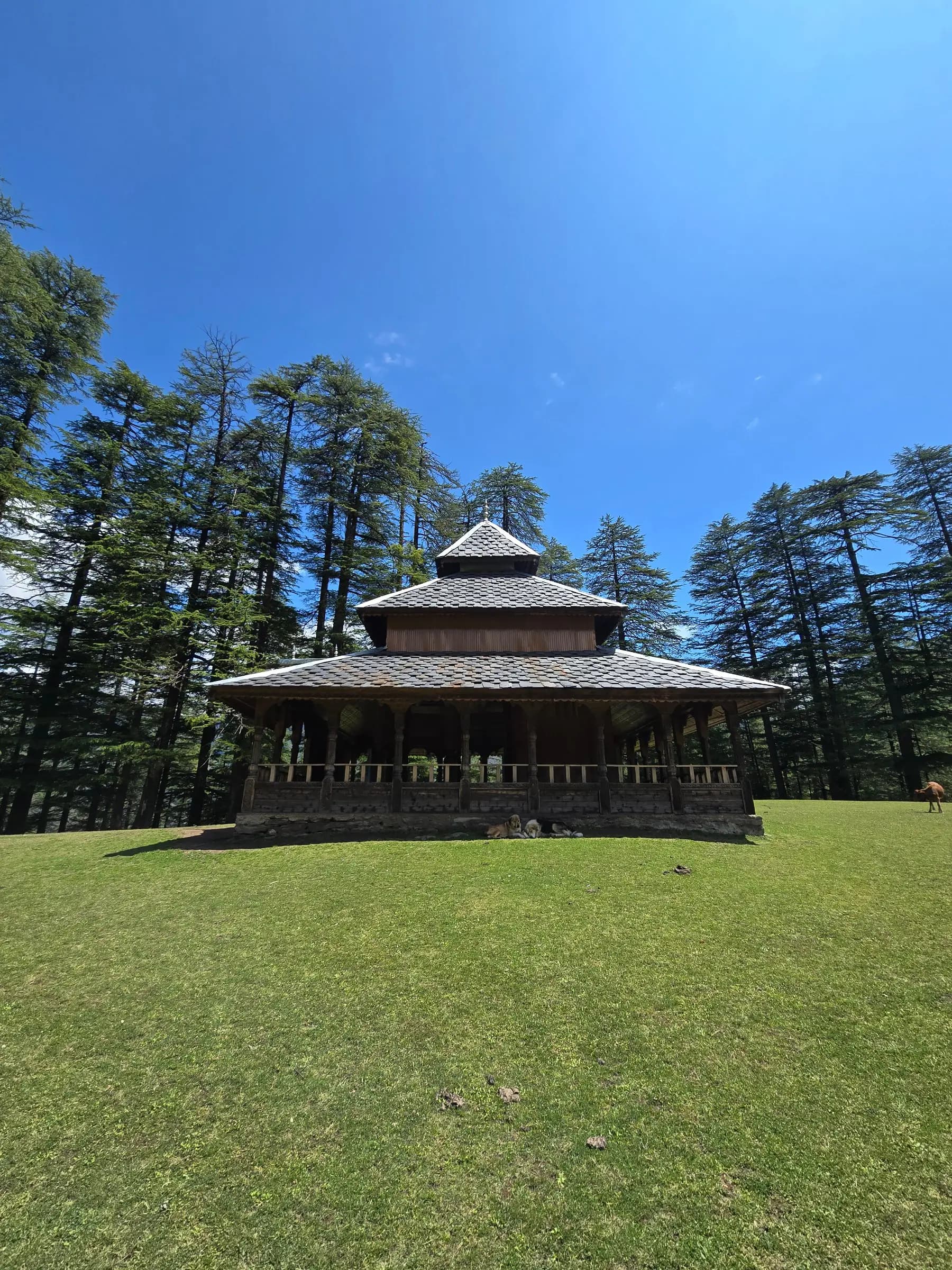
Solo on the motorcycle to Shangarh in October via Mandi and the Sainj valley — a tent I started pitching on the sacred meadow within an hour of arriving and the village elder who stopped me, three nights in a homestay above the grass, the Barshangarh walk with a boy named Tanuj, and a temple that does not allow quarrels.
By Harsh / HarshOnRoads
Based on my personal trip. This is editorial perspective from HarshOnRoads, separate from structured destination database facts.
Trip date
1 Oct 2024
Duration
5 days, 4 nights (Mandi on the way up, 3 in a Shangarh homestay)
Started from
Delhi NCR
Travel mode
Motorcycle
Companions
Solo
My rating
5/5
Would I visit again?
Yes
My actual trip cost
Actual cost from my trip — not a current estimate.
- Travel
- ₹2,300
- Stay
- ₹3,000
- Food
- ₹1,100
- Activities
- ₹500
- Miscellaneous
- ₹200
Solo on a 350cc motorcycle from Delhi via Mandi, the Aut exit and the Sainj valley, back the same way, about 1,050 km total including the Pundrik Rishi and Neuli rides; petrol only, no tolls for two-wheelers. Stay is one night at a Mandi guesthouse (700) and three nights in a Shangarh village homestay with dinner and breakfast (900 a night, which was low even for October). Activities is offerings at the Shangchul Mahadev temple and at Pundrik Rishi, and 300 pressed on Tanuj for the Barshangarh day that his grandfather tried to refuse. Food covers thalis at Mandi and Sainj, homestay lunches, parathas for the trail, siddu I made and trout I did not, and chai everywhere. Miscellaneous is parking at Mandi, a Kullu cap from Sainj, and a bag of walnuts from the roofs that Hem Raj's sister-in-law would not let me pay for.
My Experience
HarshOnRoads opinion — not universal travel advice.
What I liked
The meadow at 6 am with mist and my shoes off, Hem Raj sitting beside me in the temple courtyard telling the sanctuary tradition as fact, Barshangarh with a fourteen-year-old who knew every shortcut, siddu that leaked, trout from the Sainj, the Milky Way from the lanes, and a valley with almost nobody in it on a Wednesday.
What I didn't like
My own first hour. The roadside camps below the meadow with their bonfires and, one night, a speaker. The Sainj road's surface in places. The sense that Shangarh is five years behind Tirthan and closing.
Best part
Hem Raj saying the deota had not minded about the tent because I had stopped, and that this was the whole point.
Most overrated part
Nothing in Shangarh is overrated because almost nothing has been rated yet. The roadside camps oversell themselves as the village experience; they are the reason the village has to enforce its rules.
Best time (my experience)
October. Walnut harvest on the roofs, the meadow gold, clear cold mornings, Barshangarh still running, and a weekday village to yourself. April and May for the flowers if you avoid the weekends.
My tip
Ask the meadow's rules before you set foot on it, then keep them. Homestay above the grass, not a camp on the road. Barshangarh with a family member from 8. Temple courtyard at dusk, head covered. Cash and fuel at Sainj. Carry everything down.
My mistake
Half-pitched a tent on the sacred meadow within an hour of arriving, without asking, because it was flat, empty and I had a tent. A village elder walked across the grass and told me once, politely. I packed it with my face hot and stayed in his brother's house instead.
Worth the trip for me?
Yes, on the village's terms. Around 7,000 rupees for five days on the bike, a sacred meadow, a kath-kuni temple of refuge, a waterfall walk with nobody on it and a family's kitchen. What Tirthan was a decade ago, for as long as visitors let it stay that way.
What I would change
Ask before anything, on the first hour and every hour. Add the ridge walk to Shenshar with Tanuj. Come for the spring fair when the deota rides out. Get a GHNP permit at Sainj and give two days to Shakti.
Who this trip is for
People who want a Himachal village rather than a hill station, walkers, couples who will sit on a balcony, anyone who has done Tirthan and wants the next valley, and motorcyclists who like the Sainj hairpins. Not for campers, speakers, long-weekend groups or anyone who thinks a flat field with no fence is theirs.
Things I would skip next time
Camping on the meadow, roadside camps with music, the Sainj road after dark, May long weekends, the GHNP core without a permit, and photographing the temple interior or a household without asking.
Quick summary
I went to Shangarh because a man in a Tirthan homestay had told me, two years earlier, that Tirthan was finished and the real thing was over the ridge. He said it the way people say these things, and I filed it. In October I rode up the Sainj valley to find out, and within an hour of arriving I had done the one thing that will finish Shangarh too.
The road
Delhi to Mandi on the four-lane in a day, a night above the Beas, and in the morning the Aut exit before the tunnel, the Larji confluence, and 20 km up the Sainj river to a town with a bus stand, an ATM I emptied and a petrol pump I drained. Then the last 12 km: narrow, hairpinned, the river a long way down on the left, the valley opening at Ropa, and a shelf of flat green appearing above the trees that could only be the meadow. I was in the village at 10.30 on a Wednesday with the sun on the slate roofs and the deodars moving.
The mistake
I had a tent on the bike. I always have a tent on the bike. And the meadow, when I walked onto it from the road, was the most perfect campsite I had ever seen: flat, soft, dry, ringed by trees, a temple at one end and a view of peaks at the other, and empty. I did not ask anyone. I walked to a spot under a walnut at the edge away from the temple, dropped the bag, and had the tent half out of its sack and one pole assembled when a man in his sixties in a Kullu cap walked across the grass from the village, not quickly, and stood beside me.
He was polite. He asked where I was from and how the road had been. Then he said, in Hindi, that this was the deota's field, that nobody camps on it, that there are no fires and no tents and no alcohol and no loud voices here, that people who fight in this village come to the temple and stop fighting, and that I should pack the tent and come to his brother's house where there was a room. He did not raise his voice. He did not need to. I packed the tent with my face hot, and I have thought since about what would have happened if he had been less patient or I had been less alone: an argument, on a meadow where the whole point is that there are no arguments. I had read about Shangarh's rules. I had not connected them to a flat piece of grass and my own habits. The brother's house had a room above the meadow for 900 with dinner. I stayed three nights.
The temple
That evening, barefoot with my head covered and my wallet left in the room, I sat in the courtyard of the Shangchul Mahadev temple while the village came in for the evening: a kath-kuni building of deodar and stone with eaves carved into figures and bands and animals, a slate pagoda roof, and a bell. The elder who had stopped me, whose name was Hem Raj, sat down beside me and told me, as fact, that anyone who reaches this temple is safe, that the police have respected it, that the deota rides out to settle disputes in the valley and that his gur speaks for him. He said the meadow's rules are the deota's and the village only carries them. I said I was sorry about the tent. He said the deota had not minded because I had stopped, and that this was the whole point.
Barshangarh
The next morning at 6 I walked the meadow's edge in mist with my shoes off near the temple, and at 8 I left with Hem Raj's grandson Tanuj, who was fourteen and knew every shortcut, for Barshangarh: eight kilometres through deodar and pine, the hamlets of Barshangarh and Lapah with carved doors and walnut harvest on the roofs, and a gorge where a waterfall came down in steps into a pool cold enough to hurt. Three hours each way at Tanuj's pace, which was faster than mine, with parathas from his grandmother on a rock at the top. He asked me about Delhi. I asked him about the deota. Neither of us understood the answers. We saw nobody all day.
The pond and the park
Day three was Sainj: down the 12 km in morning light, an hour's walk up above Deohari to Pundrik Rishi, a pond in a meadow with a fence around it and a temple to a sage, quiet and odd and treated by the village with the same seriousness as Shangarh's grass. Then 12 km up the main valley to Neuli, where the road ends at a forest post and a sign for the Great Himalayan National Park, and a walk of a few kilometres into the buffer forest to see where the map turns green and stops. I did not have a permit and I turned around at the sign, which after the tent felt like the least I could do.
Siddu and the sky
The last afternoon I stood in Hem Raj's sister-in-law's kitchen at 4 and made siddu that leaked, and ate them at 6 with ghee and walnut chutney and trout from the Sainj that Tanuj's father had found somewhere, and at 9, from the lanes at the village end of the meadow, I lay on the grass, which Hem Raj said was allowed there, and looked at a sky with the Milky Way across it and the ridge black below. Three nights, about 7,100 rupees, and a tent that stayed in its sack.
What I would tell you
Insider tip: Ask the rules before you touch the grass, and keep them. Stay in a village homestay above the meadow, not at the camps on the road. Walk to Barshangarh with a family member. Sit in the temple courtyard at dusk with your head covered and ask about the sanctuary; they will tell you as fact. And carry every wrapper down to Sainj.
My mistake: Pitching a tent on the deota's meadow within an hour of arriving, without asking, because it was flat and empty and I had a tent. Hem Raj walked across the grass and told me, once and politely, and I packed it with my face hot. The meadow forbids quarrels for a reason, and I had nearly started one.
Skip this if: you want a river to sit by with a cafe menu; that is Tirthan, 30 km over the ridge, and it is fine. Skip the meadow as a campsite, skip the roadside camps with speakers, skip the Sainj road after dark, skip the long weekends in May, and skip walking past the park sign without a permit. And skip the idea that a flat green field with no fence is anyone's to use. In Shangarh it is the god's, and the village is only carrying his rules.
Would I go back? Hem Raj said the spring fair is when the deota comes out. Tanuj said he would walk me to Shenshar. I have a room booked above the grass.
Editorial note
Travel database facts and HarshOnRoads personal experiences are kept separate. Personal sections below reflect my own trip when provided.
Planning this trip?