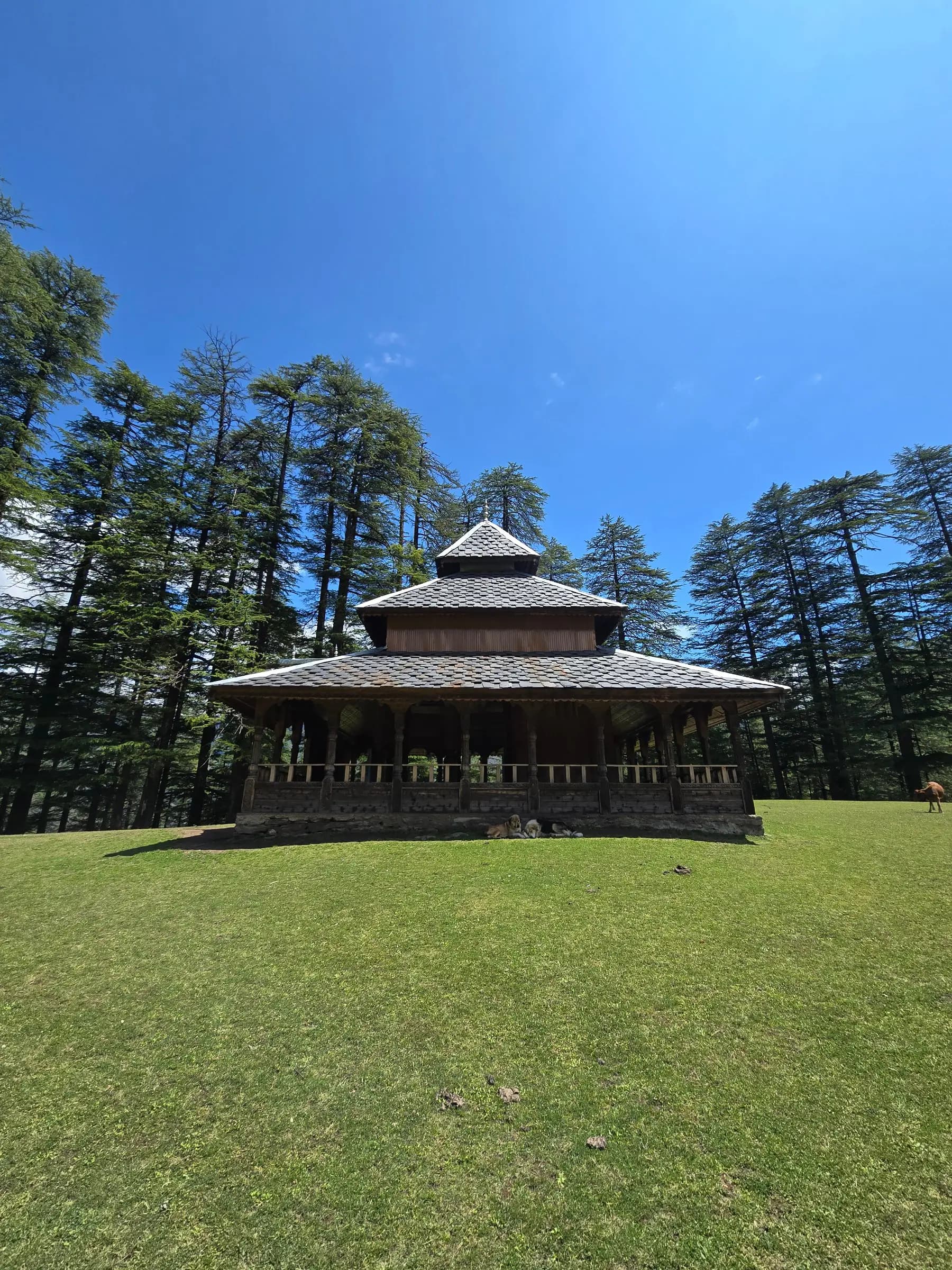
Where Is Dalhousie and Why Go?
Dalhousie sits in the north-west corner of Himachal Pradesh, in Chamba district, on the ridge that separates the Punjab plains from the Ravi valley. Pathankot in Punjab, the nearest railhead, is about 80 km and 2.5 hours below it. Chamba, the district headquarters, is about 50 km away by the road through Khajjiar. McLeod Ganj and Dharamshala are roughly 120 km to the south-east by road, which is why the two are often combined on a longer Himachal loop.
The appeal is quiet. Dalhousie has no cafe strip, no adventure-sport valley and no Mall Road bazaar on Shimla's scale. What it has is old deodar forest within walking distance of every hotel, a ridge walk at 2,750 metres that needs no guide or permit, a meadow that is at its best before 9 am, a 30 sq km wildlife sanctuary with a 1925 forest rest house at its centre, and a thousand-year-old town down the hill that most visitors skip. It suits families who want a safe, uncrowded hill station, walkers, anyone interested in colonial-era churches and bungalows, and motorcyclists heading on to Chamba, Bharmour and the Sach Pass road. It does not suit anyone looking for nightlife, and it is a long way from Delhi for a single weekend unless you travel overnight both ways.
Among its neighbours, McLeod Ganj is livelier, Bir Billing is the place for paragliding, and Shimla is closer to Delhi but far busier.
Best Places to Visit in Dalhousie
The list is short and the ranking depends on the hour of day. The full guide to the best places to visit in Dalhousie has time needed and timing tips for each; the highlights are:
- Dainkund Peak: the 3 km ridge walk from the Indian Air Force gate, about 12 km from town, to the Pholani Devi temple at around 2,750 metres. Dawn or late afternoon.
- Khajjiar: the meadow, the lake and the 12th-century Khajji Nag temple, about 24 km away. Before 9 am or after 5 pm on weekends.
- Kalatop Wildlife Sanctuary: 30.69 sq km of deodar, blue pine and oak between Dalhousie and Khajjiar, with a 3 km forest track from the Lakkar Mandi barrier to the 1925 forest rest house.
- Chamba: the old capital on the Ravi, about 50 km down, with the Laxmi Narayan temple group, the Bhuri Singh Museum and the Chaugan. A full day.
- St John's Church and Gandhi Chowk: the 1863 stone church, the oldest in Dalhousie, and the start of the Thandi Sadak and Garam Sadak loop to Subhash Chowk and the 1894 St Francis Church.
- Bakrota Hills: the top hill above the town, with the old bungalows, the better hotels and a circular forest road with the widest snow view.
- Panchpula: the stream, bridges and Sardar Ajit Singh memorial about 3 km from Gandhi Chowk; a short stop on the walk out towards the Dainkund road.
What to Eat
Chamba district has its own table, and it is worth asking for. Chamba chukh is the district's red chilli chutney, made with chillies, lime and oil, and eaten with everything. Madra, usually rajma or chana cooked in yoghurt, is the main dish of the Chamba dham, the festive thali served at weddings and, on request, at a few dhabas and homestays. Siddu, a steamed stuffed bread, and babru, a fried one, turn up at breakfast. Try them at the small dhabas around Subhash Chowk and in Chamba's bazaar; most hotels serve standard North Indian and Chinese menus, and the evening ends early.
How to Reach Dalhousie from Delhi
By road
The route is Delhi – Panipat – Ambala – Ludhiana – Jalandhar – Pathankot – Dunera – Banikhet – Dalhousie, about 560 km. NH44 to Pathankot is a divided highway with heavy truck traffic and several toll plazas, about 8 to 9 hours with breaks; the 80 km hill road from Pathankot climbs steadily through hairpins and takes 2.5 to 3 hours, longer behind buses. Expect about 12 hours door to door by car. Leave Delhi by 4 am to arrive before dark, or break the journey at Pathankot. Since 1 April 2026 Himachal Pradesh charges private cars registered outside the state an entry tax of ₹170 at the border barrier; keep cash or UPI ready. Estimate your fuel with the fuel calculator.
By train
Pathankot is the railhead and the train is the sensible way to do a long weekend. The 14035 Dhauladhar Express leaves Delhi Sarai Rohilla at 23:20 and reaches Pathankot Junction around 08:10 to 08:20 the next morning; on the current timetable it runs three days a week, so check running days on NTES before you plan around it. The daily Jammu and Katra trains also stop at Pathankot Cantt, but at awkward hours: the 12425 Jammu Rajdhani leaves New Delhi at 20:40 and reaches Pathankot Cantt at 03:10, and the 22461 Shri Shakti Express leaves at 19:05 and arrives at 02:00. From either station, a sedan taxi to Dalhousie costs about ₹1,800 and takes 2.5 hours; HRTC buses cost roughly ₹210 to ₹310 and take closer to 3 hours. For the return, the Jammu Rajdhani passes Pathankot Cantt at about 23:05 on its way back to Delhi; the Dhauladhar Express also runs back overnight. Confirm all timings on NTES or IRCTC, since schedules change.
By bus
HRTC runs direct overnight services from Kashmere Gate ISBT to Dalhousie via Pathankot. At the time of writing the booking sites list an ordinary non-AC bus leaving around 17:50 and arriving about 07:10, and a Himsuta Volvo leaving around 20:15 and arriving about 09:30, so the journey is 13 hours or a little more. Fares range from roughly ₹800 on the ordinary bus to about ₹2,200 on the AC services. Buses arrive at the Subhash Chowk bus stand. Check current departures on the HRTC booking site; schedules shift between seasons.
By air
Pathankot's airport has no scheduled flights at present; the Delhi service that ran under the UDAN scheme ended when its subsidy expired. The practical airport is Gaggal (Kangra, serving Dharamshala), about 135 km and roughly 4 hours by road from Dalhousie, with daily Delhi flights by more than one airline. Amritsar is the other option; a pre-booked taxi from either is the only realistic connection.
Best Time to Visit Dalhousie
The best months are March to June and October to November. The best time to visit Dalhousie page has the month-by-month detail; the summary is below.
March to April brings rhododendron bloom in the forest, cool clear days, and snow still visible on the Pir Panjal and sometimes lingering on the Dainkund ridge. May to June is the traditional season, with warm days of around 20 to 26°C and the plains baking below; Khajjiar is green but at its most crowded from mid-May when Punjab's schools break, and haze dulls the long views by noon. The monsoon normally reaches the region in the last week of June.
July to mid-September is monsoon. Dalhousie gets heavy rain, the Banikhet road has landslide-prone stretches, Kalatop's trails are muddy and leech-prone, and cloud hides the views. Hotels are cheap and the forest is green, but it is the wrong season for a first visit. Chamba's Minjar fair, held on the Chaugan in late July or early August (27 July to 3 August in 2026), is the one reason to come in this window.
October to November is the clearest season: washed air after the rains, the sharpest Pir Panjal views from Dainkund and Bakrota, golden light in the deodars, cold nights and thin crowds outside the Diwali week. Sunset is around 5.55 pm in mid-October and 5.25 pm by mid-November.
December to February is winter. Dalhousie records 20 to 30 snowy days a year on average, mostly in this window, and the Kalatop–Dainkund ridge gets considerably more snow than the town. In late January 2022 the town recorded over 60 cm and the Kalatop–Dainkund stretch over 100 cm, and the Dalhousie–Banikhet and Khajjiar roads were blocked until the PWD cleared them. Lighter falls, like the 15 cm or so on the upper ridge at the end of December 2025, close the Lakkar Mandi–Khajjiar road for hours rather than days. If you come for snow, book a heated room, keep an extra day in hand, do not attempt the Khajjiar or Dainkund roads before they are cleared, and expect night temperatures around or below freezing.
Suggested 2-Day Itinerary
With the overnight train to Pathankot, two full days work well: Day 1 for the Bakrota circular road, St John's and the Mall loop between the chowks, and a sunset walk; Day 2 for Khajjiar at 7.30 am before the crowd, the Kalatop forest track before lunch, and the Dainkund ridge walk in the last two hours of light. Chamba fits as a third day. The full 2-day Dalhousie itinerary has timings by season, the train and bus variations, and a three-day version with a night at the Kalatop forest rest house.
Dalhousie Trip Budget
Dalhousie is cheaper to be in than Shimla or Manali and more expensive to reach, because of the Pathankot transfer and the taxis once you are there. A typical trip for a Delhi NCR couple by overnight train, with a mid-range hotel on Bakrota and shared taxis for Khajjiar, Kalatop and Dainkund, comes to about ₹8,500 per person for two nights. On the HRTC bus with a chowk guesthouse and local buses it is about ₹5,000; a self-drive trip with three nights in an upscale Bakrota hotel is about ₹21,500. The Dalhousie trip cost guide itemises all three plans, and the trip budget calculator lets you swap in your own numbers.
Where to Stay
- Bakrota Hills: the top hill about 2 km above Gandhi Chowk, with heritage bungalows and the town's better hotels in deodar forest and the widest view of the Pir Panjal. The quietest base.
- Gandhi Chowk and Subhash Chowk: hotels and guesthouses around the two squares, convenient for the bus stand, the bazaar and the dhabas, and noisy with taxis on weekends. The practical choice if you arrive by bus or are on a tight budget.
- Khajjiar: HPTDC's hotel The Devdar sits on the meadow rim, with a handful of private resorts nearby. Stay here if you want the meadow at dawn without a 6.45 am start from Dalhousie.
- Kalatop Forest Rest House: the 1925 bungalow inside the sanctuary, with a few rooms, a caretaker and no mobile network, booked through the Divisional Forest Officer, Chamba, or the Himachal ecotourism portal. Book weeks ahead and confirm the current tariff and food arrangements when you book.
- Chamba: guesthouses and a few heritage stays in the old town, for anyone giving Chamba a night or heading on to Bharmour.
Practical Tips
- Himachal entry tax: private cars registered outside Himachal pay ₹170 at the state border barrier since 1 April 2026. Himachal-registered vehicles are exempt.
- Kalatop sanctuary fee: the forest department has charged a per-vehicle fee at the Lakkar Mandi barrier (₹250 per vehicle in 2020, nothing for walkers). Confirm the current rate at the barrier; the track is a pleasant 3 km walk anyway.
- Dainkund: the walk starts at the Indian Air Force station gate; carry photo ID, do not photograph the installation, and stay on the path. The ridge is exposed, windy and several degrees colder than town. Turn back if cloud closes in.
- Bhuri Singh Museum, Chamba: open 10 am to 5 pm, closed on Mondays and gazetted holidays; ₹50 for Indian adults, ₹30 for children under 10, ₹100 for a camera. Plan the Chamba day for Tuesday to Sunday.
- Winter roads: after heavy snow the Dalhousie–Banikhet, Lakkar Mandi, Kalatop, Khajjiar and Dainkund roads are blocked until the PWD clears them. Wait for clearance, carry chains if you drive your own car in January or February, and keep a spare day.
- Monsoon: the Banikhet–Dalhousie road has landslide-prone stretches from July to mid-September; check conditions at Pathankot.
- Khajjiar: horse rides, zorbing and paragliding touts operate on the meadow in season; if you want to paraglide, use a licensed operator at Bir Billing instead.
- Wildlife: Himalayan black bear and leopard live in the Kalatop sanctuary. Walk the tracks in daylight and in company.
- Cash and network: ATMs at the chowks, cards in hotels; the network is patchy at Khajjiar and absent at the Kalatop rest house. Carry cash for taxis, dhabas and the barrier.
- Heating: nights are cold in every month above 1,900 metres; from November to March ask whether your room is heated before booking.
Frequently Asked Questions
How far is Dalhousie from Delhi and how long does it take?
About 560 km by road via Pathankot, which takes around 12 hours by car with breaks or about 13 hours on an overnight HRTC bus. By train, the overnight Dhauladhar Express from Delhi Sarai Rohilla reaches Pathankot in the morning, and Dalhousie is a further 2.5 to 3 hours by taxi or bus.
What is the best time to visit Dalhousie?
March to June and October to November. October and November have the clearest mountain views; March and April have rhododendrons and lingering snow on the ridge. Visit from late December to February only if you want snow and can cope with road closures and freezing nights.
Does Dalhousie get snow in December?
Sometimes. The upper ridge at Kalatop, Lakkar Mandi and Dainkund usually sees the first snow in late December, while the town gets its heaviest falls in January and February. Snow is not guaranteed on any given weekend, so treat it as a bonus rather than a plan.
How many days do you need for Dalhousie?
Two full days cover the town, Khajjiar, Kalatop and Dainkund if you arrive by overnight train. Three days adds Chamba; four allows a Kalatop rest house night or Bharmour.
How far is Khajjiar from Dalhousie?
About 24 km by a good forest road through Lakkar Mandi and past the Kalatop sanctuary, roughly 40 to 50 minutes by car. From Khajjiar the road continues down to Chamba, about 25 km further, which makes a natural loop.
What does a Dalhousie trip cost from Delhi?
About ₹8,500 per person for two nights by overnight train with a mid-range hotel and shared taxis. Roughly ₹5,000 on the HRTC bus with a guesthouse at the chowks, and about ₹21,500 for a self-drive trip with three nights in an upscale Bakrota hotel.
Is Dalhousie worth visiting compared with Shimla or Manali?
Yes, if you want a quieter hill station with forest walks and views rather than a busy Mall Road or adventure sports. It is further from Delhi than Shimla and has less to do than Manali, but Dainkund, Kalatop and Chamba together give it a character neither has.
Do you need any permits in Dalhousie?
No permits are needed for Dalhousie, Khajjiar, Dainkund or Chamba. The Kalatop sanctuary charges a per-vehicle fee at its barrier, the Dainkund walk starts at an Air Force gate where ID may be asked for, and out-of-state cars pay the ₹170 Himachal entry tax at the border.