
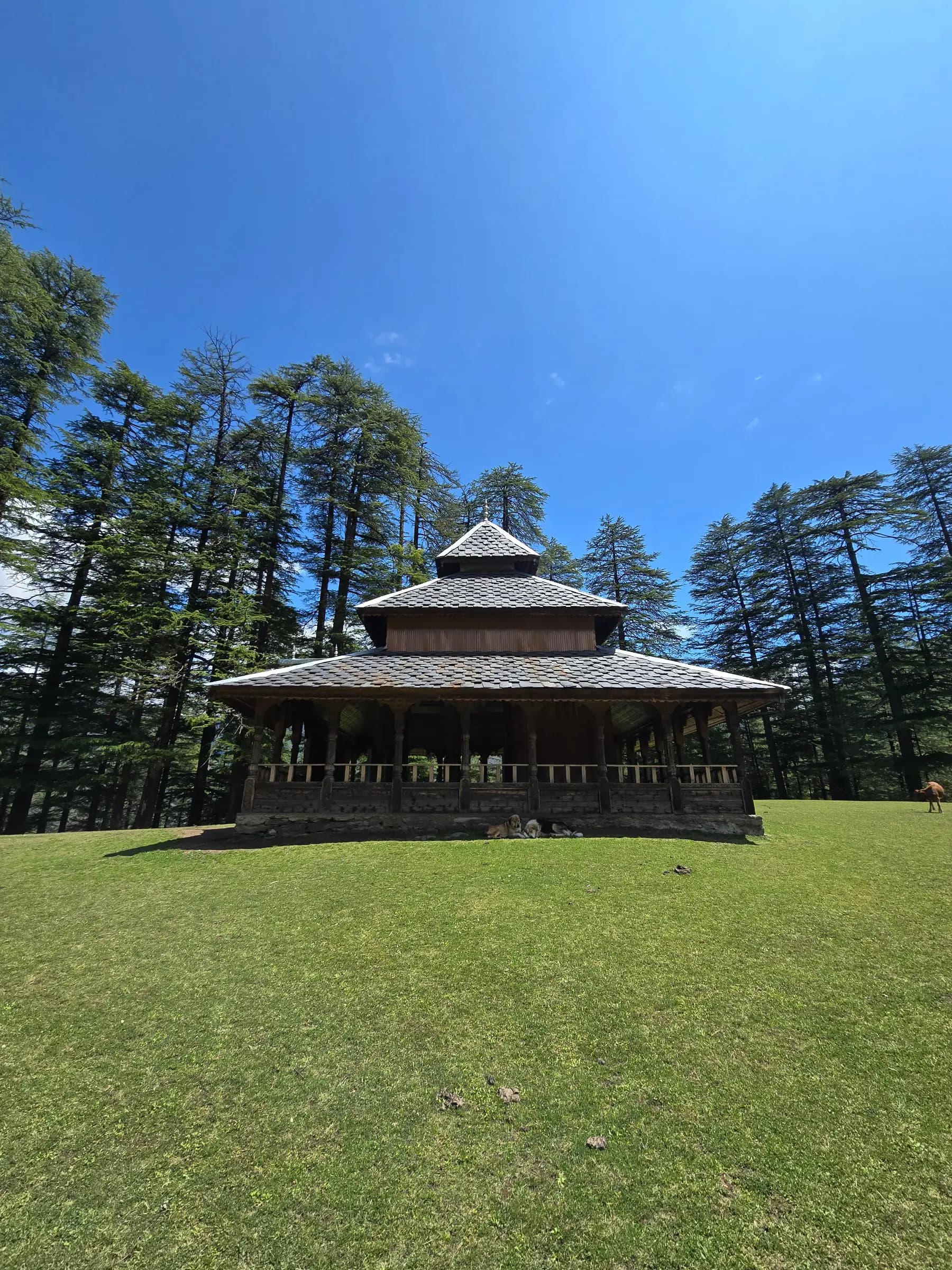
Ten places to visit in Shangarh and the Sainj valley, from the sacred meadow and Shangchul Mahadev Temple to Barshangarh Waterfall, Pundrik Rishi Lake and Neuli.
Quick summary
Shangarh is a small village in the Sainj valley of Kullu district, Himachal Pradesh, and most of the places to visit in Shangarh are within walking distance of its meadow. The rest sit along the road you come in on: the GHNP gate at Neuli, Sainj town, the Larji confluence and, further away, the Tirthan valley. For each place below you get what it is, why it is worth your time, how long to give it and one practical tip. For getting there and where to stay, start with the Shangarh destination guide.
1. Shangarh Meadow
What: A wide, flat meadow ringed by deodar forest at a little over 2,000 metres, with the village above it and Shangchul Mahadev Temple at its edge. The village treats it as sacred ground belonging to its deity.
Why go: It is the reason Shangarh is known at all. Dawn and dusk are the best hours, when the light is low and the meadow is quiet.
Time needed: An hour at dawn or dusk; longer if you simply want to sit at the edge.
Tip: Do not pitch a tent or camp on the meadow; the village does not allow it and fines have been reported for those who try. Alcohol, smoking and loud music are also not acceptable here. Carry all your rubbish back down with you.
2. Shangchul Mahadev Temple
What: The village temple of Shangchul Mahadev, built in the traditional kath-kuni style of layered deodar timber and stone, with carved woodwork and a tiered roof.
Why go: It is a fine example of Kullu hill architecture and the centre of village life. Local tradition holds that anyone who seeks refuge within Shangarh's sacred boundary is under the deity's protection, which is why the village has long been described as a sanctuary, including for couples who have eloped.
Time needed: 30 to 45 minutes.
Tip: The rules here are strict and taken seriously. Leather goods, alcohol and cigarettes are not allowed; weapons are not permitted; and fights or loud talk are not tolerated on the sacred ground. Visitors are generally not allowed inside the temple itself, so view it from outside unless a caretaker invites you further. Leave leather belts and wallets in your room, remove your shoes where asked, and ask before taking photographs.
3. Barshangarh Waterfall
What: A waterfall in a rocky gorge about 3 km from Shangarh, on the way to Barshangarh village.
Why go: It is the easiest nature walk from the village, through the meadow edge and forest, and ends at a cold pool among boulders.
Time needed: Two to three hours if you walk from the village. Alternatively, drive to the parking area and walk the last 500 to 600 metres over boulders, about 10 to 15 minutes each way.
Tip: Wear shoes with good grip; the rocks near the fall stay wet. Do not swim in the monsoon, when the current can be strong, and leave nothing behind. Mornings are quieter.
4. Pundrik Rishi Lake
What: A small sacred lake associated with the sage Pundrik Rishi, set in forest above Deohari village close to Shangarh. Much of the water is now covered by vegetation, so expect a quiet pond rather than an open lake.
Why go: The forest walk is the real attraction, and the site is revered locally.
Time needed: Half a day. The trail from Deohari is roughly 3 to 4 km and takes 1.5 to 2 hours up. Deohari is just below Shangarh, so there is no need to go down to Sainj first.
Tip: Ask your homestay for the route or go with a local, start early so you are down well before dark, and treat the lake as a place of worship.
5. Shangarh Village Lanes
What: The lanes above the meadow, with slate-roofed kath-kuni houses, carved doors and woodpiles stacked for winter.
Why go: They show how the village actually lives, and they are where most homestays are.
Time needed: One to two hours, best in the afternoon.
Tip: Ask before photographing people or homes, and stay in a village homestay rather than a roadside camp so your money stays in the village.
6. Shenshar and the Manu Rishi Temple
What: A heritage hamlet in the upper Sainj valley with a five-tiered pagoda-style temple to Manu Rishi.
Why go: It sees far fewer visitors than Shangarh and has one of the valley's most striking temples.
Time needed: A half day, best combined with Neuli. The road climbs from Neuli through a series of hairpin bends.
Tip: Do not count on a bus from Neuli; plan on your own vehicle or a hired taxi, and drive the hairpins slowly and in daylight.
7. Neuli and the GHNP Gate
What: Neuli is a village about 3 km beyond Ropa on the main Sainj valley road, where trails into the Great Himalayan National Park begin. Ropa is the junction you pass on the way up to Shangarh, and it has the park's range office for the Sainj valley.
Why go: To see where the national park begins, and to start a guided trek if you have arranged one.
Time needed: Two to three hours from Shangarh for a look around; several days for a trek.
Tip: Entry to the park is not allowed without prior permission. Get your permit from the Ropa range office (or the park head office at Shamshi, or the Shairopa range office on the Tirthan side) and agree your route with the range officer. Multi-day trekkers must hire certified guides and porters. Fees change, so confirm the current permit fee at the Ropa office.
8. Sainj Town and the Valley Road
What: The valley's market town, about 18 to 22 km up from Aut along a paved road beside the Sainj river.
Why go: It is not a sight, but it is your supply stop: the valley's ATMs are here, along with shops and dhabas.
Time needed: 30 minutes to an hour on the way through.
Tip: Withdraw enough cash for your whole stay, and do not count on card or UPI payments further up. The roughly 16 km from Sainj to Shangarh is a steep, winding, single-lane road with tight hairpins and narrow passing bays: drive it in daylight and give way on the bends.
9. Larji Confluence
What: The point near the Aut tunnel where the Sainj and Tirthan rivers meet the Beas, and where you leave the Manali highway for the Sainj valley.
Why go: It is a short scenic stop on the way in or out.
Time needed: 10 to 15 minutes.
Tip: Stop only where there is safe space off the road, and stay away from the water's edge; river levels below hydropower projects can rise quickly.
10. Tirthan Valley
What: The neighbouring river valley, with trout streams, the park's Tirthan-side range office and many more guesthouses and cafes than Shangarh.
Why go: If you want a riverside stay and more choice of food and rooms.
Time needed: A full day at least, ideally an overnight stay. It is roughly 50 to 70 km by road, back down via Sainj and Larji, depending on where in Tirthan you are heading. It is not a short hop over the ridge.
Tip: Treat it as a separate stop on your route rather than a day trip from Shangarh.
When to go
March to June and October to November are the best months for Shangarh. July to September is monsoon season, when trails get slippery and hill roads are prone to landslides. In winter, snow can close the upper road. See the best time to visit Shangarh for a month-by-month breakdown.
What to avoid
- Camping on the meadow. It is not allowed.
- Alcohol, smoking, leather and loud music on the sacred ground.
- The Sainj to Shangarh road after dark, especially on a first visit.
- Entering the national park without a permit.
- Long weekends in May if you want quiet.
How to fit it together
With two days you can cover the meadow, the temple, Barshangarh Waterfall and Pundrik Rishi Lake. Follow the 2-day Shangarh itinerary if you are coming by overnight bus. With a third day, add Neuli, Shenshar and Sainj, as in the 3-day Shangarh itinerary. For prices, see the Shangarh trip cost guide, or build your own plan with the trip planner.