Where Is Manali and Why Go?
Manali sits in Kullu district at the top of the Kullu Valley, about 50 km north of Bhuntar airport and roughly 40 km beyond Kullu town. The Beas runs through the middle; the Manalsu stream joins it from the west, separating the Mall Road area from Old Manali on the hill above. Deodar forest covers the slopes, and the Manali Wildlife Sanctuary begins about 2 km from town. North of Manali the road climbs past Solang to the Atal Tunnel and, separately, up to Rohtang Pass, both leading into Lahaul.
The reasons to go are variety and access. Within a 25 km radius you have a 16th-century wooden temple, a hot-spring village, a waterfall walk, an adventure-sport meadow, a castle that once belonged to the Kullu rajas, and a tunnel into a completely different high-altitude landscape. Manali suits families on a first Himalayan snow trip, couples who want a slow week in Old Manali, motorcyclists heading for Lahaul, Spiti or Leh, and trekkers using it as a base for routes such as Bhrigu Lake and Hampta Pass with a registered guide.
What it does not suit is a rushed long weekend in peak season. The traffic between Manali, Solang and the tunnel portal on busy days can eat half a day, so plan early starts and fewer stops.
Best Places to Visit in Manali
The full ranked list, with time needed and tips for each, is in the best places to visit in Manali guide. In short:
- Old Manali – the original village above the Manalsu, with the Manu Temple, guesthouses and cafes.
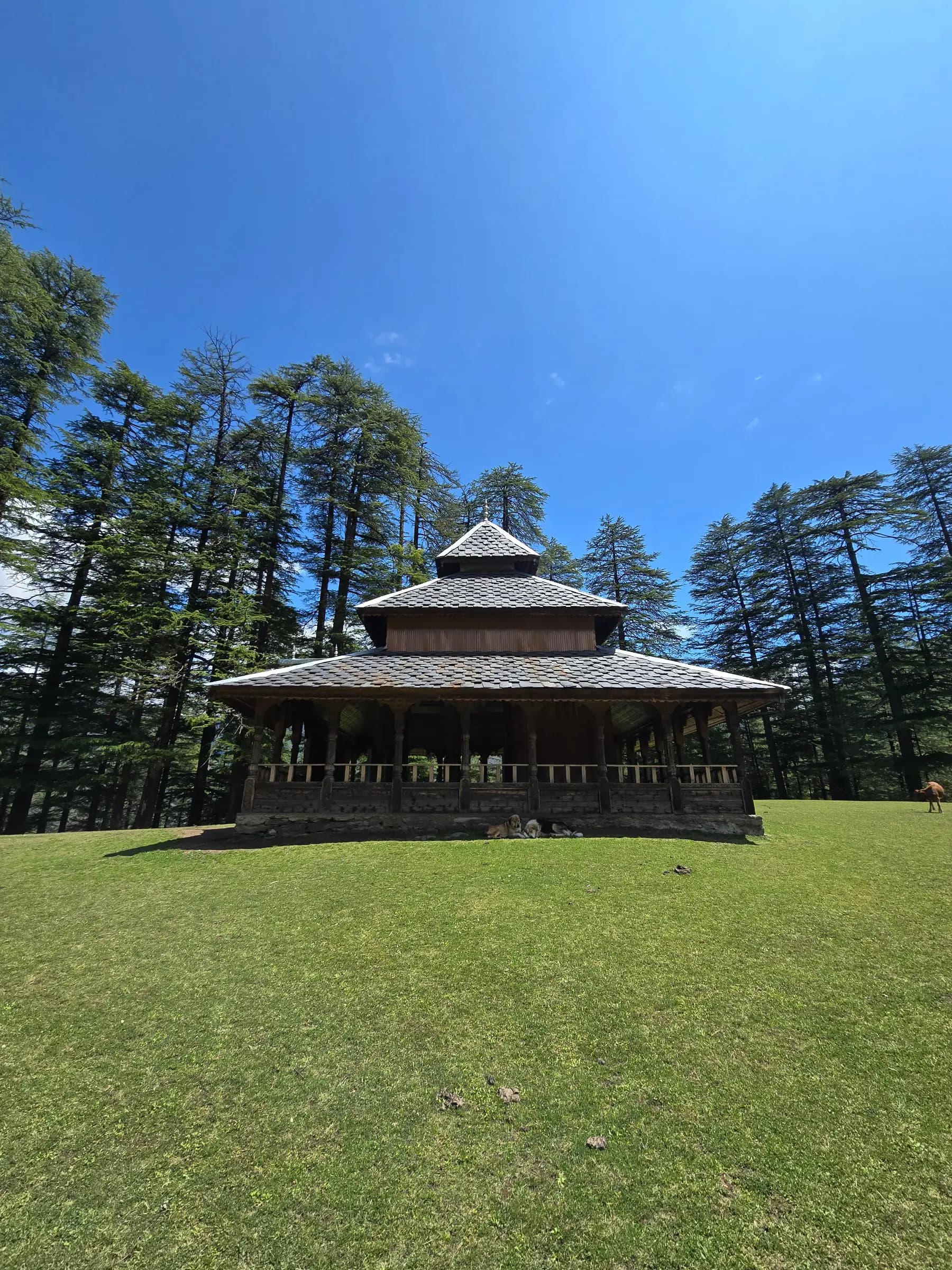
- Hadimba Temple – the four-tiered wooden pagoda built in 1553 in the Dhungri deodar forest; go early.
- Vashisht – a village 3 km from town across the Beas with sulphur hot-spring baths at the temple.
- Jogini Falls – a walk of about an hour each way from Vashisht to a waterfall with a small shrine.
- Sissu and the Atal Tunnel – the 9.02 km tunnel into Lahaul and the open valley beyond it.
- Solang Valley – the meadow 13 km north for paragliding, the ropeway and winter skiing.
- Naggar Castle – the old seat of the Kullu rajas, about 22 km down the valley, with the Roerich art gallery nearby.
- Rohtang Pass – the 3,980 m pass, 51 km from town, open in summer and autumn on a vehicle permit.
What to Eat
Himachali food is worth seeking out over the generic menus on the Mall. Look for siddu, a steamed wheat bun usually stuffed with a walnut or lentil filling and eaten with ghee, and trout, which the state tourism department notes is on most restaurant menus in Manali. A Himachali thali with rajma, local greens and rice is the most filling cheap meal in town. Old Manali and Vashisht cafes serve Italian, Israeli, Mexican and continental food alongside Indian dishes, and the Mall area has thali places, Tibetan momos and thukpa, and street snacks.
For things to take home, look for dried fruit, apple products and Kullu shawls from cooperative or government emporium outlets rather than roadside stalls, so you know what you are paying for.
How to Reach Manali from Delhi
By road (car or motorcycle)
The usual route is Delhi – Panipat – Ambala – Chandigarh (Zirakpur side) – Ropar – Kiratpur – Bilaspur – Sundernagar – Mandi – Aut – Kullu – Manali, about 540 km. The Kiratpur–Nerchowk four-lane section, opened in 2023, and the tunnels between Pandoh and Aut have shortened the hill stretch, but the full drive is still 12 to 14 hours with breaks. Leave Delhi before 5 am, or split the drive with a night at Chandigarh or Mandi, especially on a motorcycle. The final 38 km between Kullu and Manali runs beside the Beas and has been badly damaged by floods in 2023 and 2025, so expect diversions and slow sections. Use the fuel calculator to estimate fuel cost for your vehicle.
By bus
This is how most Delhi NCR travellers do it. Himachal Road Transport Corporation (HRTC) runs Volvo and other AC services from Kashmere Gate ISBT, and many private operators run overnight AC sleeper and semi-sleeper coaches. Buses leave in the evening and reach Manali the next morning after roughly 12 to 14 hours. Book HRTC on its official site or a booking app at least a couple of weeks ahead for May, June, Diwali and long weekends.
By train
There is no railway to Manali. The practical railhead from Delhi is Chandigarh, about 300 km from Manali: Shatabdi and other trains reach Chandigarh from New Delhi in about 3 to 4 hours, and from there it is a bus or taxi for the rest of the way. The narrow-gauge Kangra Valley line from Pathankot ends at Joginder Nagar, but it has had long suspensions after flood damage, so do not plan around it without checking the current status on NTES.
By air
The nearest airport is Kullu–Manali Airport at Bhuntar, about 50 km south of Manali, with limited flights from Delhi that are prone to weather cancellations. Chandigarh airport has far more flights from Delhi and other cities, followed by the same road journey of about 300 km as from the Chandigarh railhead.
Best Time to Visit Manali
The best time to visit Manali is March to June and October to November. Those six months give you open roads, mostly clear weather and every activity running. December to February is a separate snow season with real trade-offs, and July to mid-September is monsoon, when you should go only with flexible plans. The full month-by-month view is on the best time to visit Manali page.
March and April: spring, fewer crowds
Snow usually lingers on the higher slopes into March, nights are cold and days are fresh and clear. Orchards begin to blossom in April. Rohtang Pass is still closed, but the Atal Tunnel road to Sissu is normally open, Solang still has snow early in the season, and hotel rates are lower than in May and June. Carry proper warm layers in March.
May and June: peak season
This is when the valley is warm (summer daytime temperatures in the low to high 20s °C), Rohtang Pass reopens (it reopened in mid-May in 2026) and every road and activity is running. It is also when Manali is most crowded and most expensive, with jams at Solang, the tunnel approach and the Kullu–Manali stretch. Go on weekdays if you can and book stays early. The monsoon usually reaches Himachal around the last week of June, so the first three weeks of June are the safer part of the month.
July to mid-September: monsoon, high risk
Monsoon brings landslides, flash floods and road closures. In July 2023 the Beas washed away sections of the highway between Mandi and Manali, and in August 2025 floods cut the Kullu–Manali highway for more than three weeks and destroyed bridges including the one at Old Manali. The Kullu administration suspends paragliding, rafting and several other adventure activities from 15 July to 15 September. If you travel in this window, keep spare days, check the forecast and road status daily, and avoid riverbanks.
October and November: clear and quiet
After the monsoon, skies clear, crowds thin outside Dussehra and Diwali, and the poplars and willows in Lahaul turn gold. Days are pleasant and nights get cold, falling towards freezing by late November. Rohtang Pass usually stays open until heavy snow closes it, typically in late November. This is the best window for clear mountain views and quieter stays.
December to February: snow season
Manali gets most of its snowfall between December and early March, but snowfall in the town itself varies a lot from year to year, so a January trip is not a guarantee of snow on the Mall. Night temperatures fall below freezing and can drop below minus 5 °C in December and January. After fresh snowfall, police often stop ordinary vehicles at Solang or Nehru Kund and allow only 4x4 vehicles towards the Atal Tunnel, and Rohtang is closed. Manali's Winter Carnival is held in the first week of January. Go for the snow and Solang skiing, but only with chains or a 4x4 and a driver who knows snow, flexible dates and a heated room.
Suggested 2-Day Itinerary
Two days in Manali from Delhi means an overnight bus each way. Day 1: arrive in the morning, settle into Old Manali, visit Hadimba Temple and the Manu Temple, and end at the Vashisht hot springs. Day 2: leave by 6 am for the Atal Tunnel and Sissu before the traffic builds, stop at Solang on the way back, then walk to Jogini Falls in the afternoon before the evening bus. The hour-by-hour version, with winter and Rohtang alternatives, is in the 2-day Manali itinerary.
Manali Trip Budget
A typical Manali trip from Delhi NCR costs about ₹9,500 per person for three nights, with an HRTC Volvo both ways, a mid-range guesthouse shared by two, food, a scooter for a day and entry tickets. A tight budget trip can come in around ₹7,000, and a self-drive trip with better hotels and paid activities around ₹24,000 per person. Prices rise sharply in May, June, Diwali, Christmas and New Year. See the line-by-line Manali trip cost breakdown or plug your own numbers into the trip budget calculator.
Where to Stay
- Old Manali: guesthouses, homestays and boutique stays in the lanes above the Manalsu, a walk from the Mall but away from most traffic. Good for couples and slow travel.
- Vashisht: a compact village across the Beas with the hot springs, rooftop cafes and valley views, and on the right side of the river for an early start to Solang and the tunnel.
- Mall Road and Model Town area: the most hotels and the easiest access to buses and shopping, but also the most noise and traffic.
- Left bank (Prini, Jagatsukh) and Naggar: quieter resorts, homestays and the HPTDC-run heritage hotel at Naggar Castle, best if you have your own vehicle.
- Solang and Palchan side: closer to Solang and the tunnel, useful in snow season, but further from restaurants and the town.
Practical Tips
- Rohtang permits: every vehicle crossing the Gulaba barrier needs an online permit from rohtangpermits.hp.gov.in. The fee is ₹550 for a car (₹500 permit plus ₹50 congestion charge), the daily limit is 1,200 vehicles (800 petrol, 400 diesel) released at 10 am and 4 pm, permits can be taken only for the next two days, vehicles must be under 10 years old and a printout is compulsory. In 2026 the road was announced closed on Tuesdays for BRO maintenance; this rule has changed between seasons, so check before planning a Tuesday visit.
- Atal Tunnel: no permit is needed for the tunnel, Sissu or Lahaul. Fuel up in Manali and carry warm layers, as the valley beyond the tunnel is around 1,000 m higher than Manali.
- Winter driving: after snowfall, follow police advisories; ordinary cars are often turned back below Solang. Carry chains, avoid driving on black ice in the early morning and late evening, and never stop in avalanche or slide-prone stretches.
- Monsoon: adventure activities are suspended from 15 July to 15 September, and highway closures can strand you for days. Check road status before leaving and keep buffer days.
- Adventure sports: use operators and paragliding pilots registered with the Himachal tourism department, insist on helmets and harnesses, and skip flights in high wind or rain.
- Network: the state tourism department lists 4G coverage from all major networks in Manali town; coverage thins quickly in Lahaul and on the Rohtang road, so download offline maps.
- Riverbanks: the Beas is fast and cold; do not stand on boulders near the water for photographs.
Frequently Asked Questions
What is the best season to visit Manali?
March to June and October to November are the best seasons. Spring and early summer bring open roads and pleasant days, while October and November bring clear skies and fewer crowds. Visit from December to February only if you specifically want snow, and avoid July to mid-September because of monsoon landslides.
Do you need a permit for the Atal Tunnel?
No. The Atal Tunnel, Sissu and the Lahaul valley need no permit. The online permit applies only to vehicles going beyond Gulaba towards Rohtang Pass.
How much does the Rohtang Pass permit cost?
₹550 per car, made up of a ₹500 permit fee and a ₹50 congestion charge, booked online at rohtangpermits.hp.gov.in. Only 1,200 vehicles are allowed each day, so permits for peak dates go quickly.
When does Manali get snow?
Most snowfall comes between December and early March, with January usually the coldest month. Snow in the town itself is not guaranteed every year, but Solang and the higher roads usually have snow through the winter.
How do you reach Manali from Delhi?
Most people take an overnight Volvo from Kashmere Gate ISBT, which takes 12 to 14 hours. By car the 540 km drive goes via Chandigarh, Kiratpur, Mandi and Kullu. The nearest airport is Bhuntar, about 50 km away, and the practical railhead is Chandigarh.
How many days are enough for Manali?
Three to five days in Manali, plus the overnight journey each way, covers the town, Vashisht, Jogini, Sissu, Solang and Naggar without rushing. Two full days is the minimum.
Is it safe to visit Manali in the monsoon?
It is risky. The Kullu–Manali highway was badly damaged by floods in 2023 and 2025, and adventure activities are suspended from mid-July to mid-September. If you must go, keep flexible dates and check road conditions daily.
Planning a longer Himachal circuit? Pair Manali with Shimla on the way up, or compare it with a shorter trip to Rishikesh.