Where Is Jaisalmer and Why Go?
Jaisalmer sits in the heart of the Thar Desert in western Rajasthan, about 300 km west of Jodhpur and 330 km south-west of Bikaner. The town was founded in 1156 by Rawal Jaisal, a Bhati Rajput ruler, as a stronghold on the caravan routes that linked India with Central Asia. Trade made it rich through the 18th and 19th centuries, which is when the great havelis were built; the sea routes and then Partition ended the caravans, and the town stayed small. Today the fort, the havelis and the desert camps are the economy.
Three things justify the distance. First, the fort is one of very few inhabited forts anywhere, with Jain temples from the 12th to 16th centuries, a former royal palace and lanes that still follow their medieval plan. Second, the merchant havelis below it carry the most intricate sandstone carving in Rajasthan. Third, the desert is real: dunes up to 60 metres high at Sam, quieter sand around Khuri, and skies with almost no light pollution. Add Kuldhara, Bada Bagh and, for anyone with a vehicle and a spare day, the border road to Longewala and Tanot.
Jaisalmer pairs naturally with Jodhpur, about 300 km east on the same railway line, and a longer loop can add Jaipur on the way out or Udaipur on the way back.
Best Places to Visit in Jaisalmer
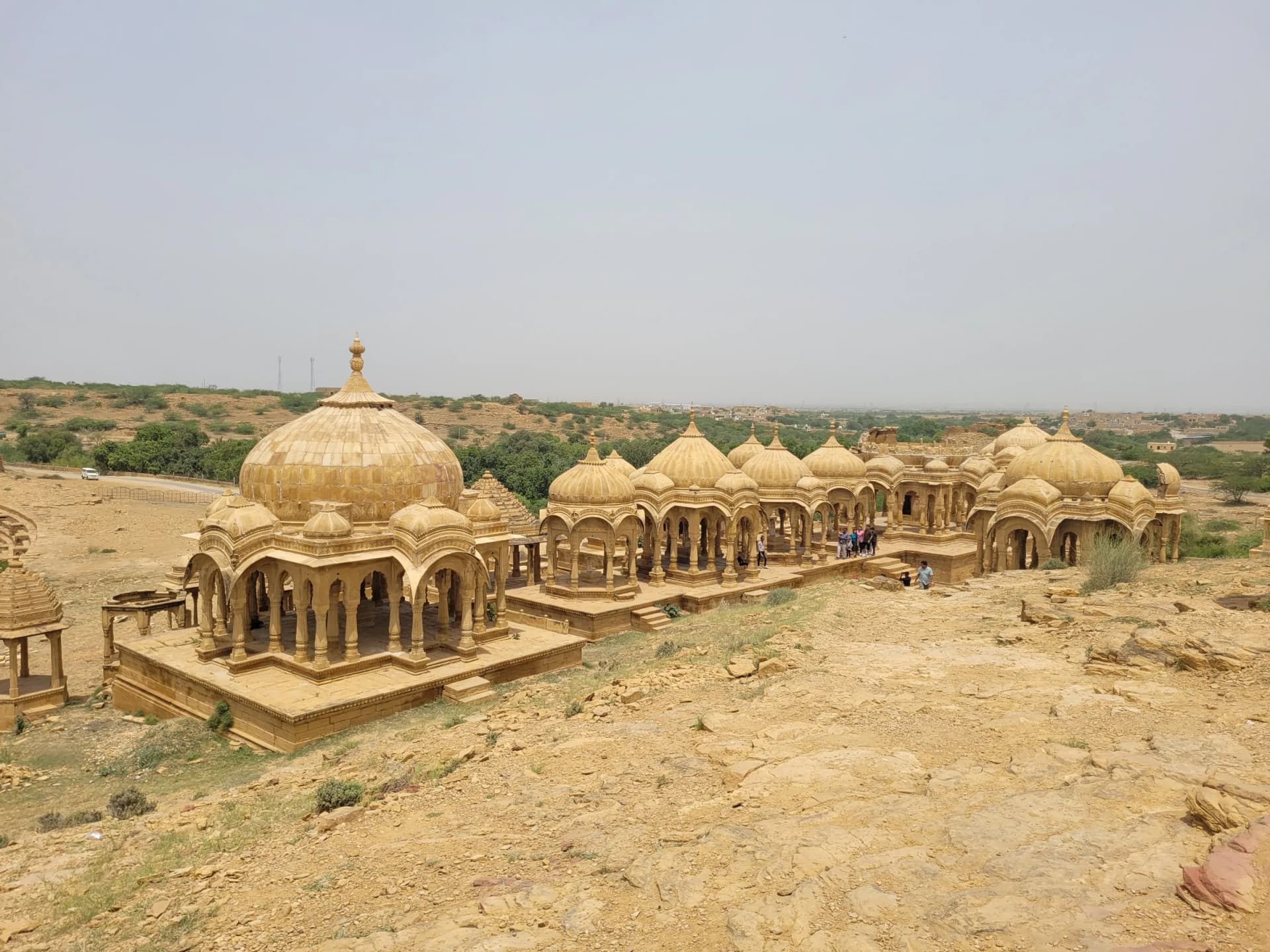
Eight places make the shortlist. In town: Jaisalmer Fort, with its seven Jain temples (open to visitors 8 am to 12 noon) and the Raj Mahal palace museum; Patwon ki Haveli, five adjoining merchant mansions in a narrow lane, with a government-run museum and the privately run Kothari's Patwa Haveli museum; Salim Singh Ki Haveli, with its flared, peacock-shaped upper storey; and Gadisar Lake, the reservoir first built in 1156 and rebuilt around 1367, about 1.5 km south of the fort. Outside town: Bada Bagh, the royal cenotaphs 6 to 7 km north; Kuldhara, the abandoned village about 18 km west; Khuri Dunes, the quiet desert village 40 to 50 km south-west; and Sam Sand Dunes, the big dune field about 40 km west.
The full ranking, with what each place is, how long it needs and the hour of the day that makes it work, is in the guide to the best places to visit in Jaisalmer.
What to Eat
Jaisalmer's food is desert food, built on what grows without rain. Ker sangri is the signature dish: dried desert berries and beans cooked with spices and oil, eaten with bajra roti, a thick millet flatbread, ghee and garlic chutney. Gatte ki sabzi (gram-flour dumplings in a yoghurt gravy), dal baati churma and, in non-vegetarian restaurants, laal maas complete the standard Rajasthani thali. Small thali restaurants in the lanes below the fort serve all of this at everyday prices; rooftop restaurants with fort views charge more and add Indian, Italian and Israeli menus for tourists.
For sweets, look for ghotua laddu, a Jaisalmer speciality, in the sweet shops around Gandhi Chowk. Desert camps serve a set dinner, usually a vegetarian thali, so eat lunch in town before heading out. Bhang shops operate openly in the old town; skip them, since the desert roads are no place to be impaired.
How to Reach Jaisalmer from Delhi
By train (the standard option)
The 14659 Runicha Express runs daily from Old Delhi (departure 17:35) via Delhi Sarai Rohilla (17:50), Jaipur and Jodhpur, reaching Jaisalmer at 11:55 the next day: 921 km in about 18 hours 20 minutes, with 1AC, 2AC, 3AC and sleeper coaches. The return 14660 leaves Jaisalmer at 16:45 and reaches Delhi Sarai Rohilla at 10:48 and Old Delhi at 11:15 the next morning. The Ranikhet Express (15013/15014) also runs daily through Delhi to Jaisalmer and takes about 19 hours. Book early for winter weekends and the Desert Festival; check current timings on NTES or IRCTC before travelling, since schedules change.
By car or motorcycle
Two routes, both long. The shorter is via Bikaner: Delhi to Bikaner is about 440 km and Bikaner to Jaisalmer about 330 km, around 770 km and 15 hours of driving in total through Hisar, Shekhawati and Pokhran. The longer is via Jodhpur: about 594 km to Jodhpur and another 305 km across the desert to Jaisalmer, roughly 900 km. Either way, break the journey overnight at Bikaner or Jodhpur; attempting Delhi to Jaisalmer in one push means arriving after dark on roads with stray cattle, and the Pokhran to Jaisalmer stretch has long gaps between fuel pumps. On a motorcycle, allow two riding days each way at minimum. Use the fuel calculator to budget the round trip.
By bus
There is no dependable direct bus from Delhi. The practical option is to change at Bikaner: Delhi to Bikaner takes about 10 hours and Bikaner to Jaisalmer about 5 hours more, with tickets for the whole route typically in the ₹850 to ₹1,600 range depending on bus type. Connections via Jaipur or Jodhpur take longer. For most people the train is both cheaper and more comfortable.
By air
Jaisalmer airport is seasonal. Direct Delhi to Jaisalmer flights, about 1 hour 45 minutes, are operated by IndiGo and Air India under the winter schedule, which in 2026 begins on 25 October; scheduled flights are normally suspended from April to September. Fares rise sharply for December to January and the Desert Festival week. Outside the season, fly to Jodhpur and take the train or a cab for the last 300 km.
Getting around
The old town is on foot. Autos cover Gadisar, Bada Bagh and the station. For Kuldhara, Khuri or Sam, hire a cab for the afternoon or use the camp's pick-up; most camps offer one. Scooters and motorcycles are available for hire in town and suit the desert roads, which are straight and quiet, as long as you carry water and fill the tank before leaving.
Best Time to Visit Jaisalmer
October to February is the season, and November to January is its core. Daytime highs settle around 22 to 24°C in December and January, the sky is clear almost every day, and desert nights fall to about 5 to 7°C, which is what makes a night on the dunes memorable rather than merely hot. The Desert Festival (Maru Mahotsav) is held over three days around the February full moon; the 2026 edition ran from 30 January to 1 February at Sam and in town. Camps and hotels fill months ahead for that week, Christmas to New Year and long weekends.
October and February are the shoulders: warmer afternoons, fewer people and lower camp prices, with October still carrying some post-monsoon heat. March is workable for the fort and havelis but afternoons are already hot and the desert is less pleasant.
April to September is not recommended. Daytime temperatures run from 40 to 46°C, dust storms are common in May and June, many desert camps close, and the airport suspends scheduled flights. The monsoon is thin here and brings humidity rather than relief. If you must visit in these months, keep sightseeing to early morning and after 5 pm, and stay in town rather than the desert.
Winter mornings need a jacket and the sun is strong by 11 am even in January; do the fort and havelis early and the desert late. For month-by-month detail, see the best time to visit Jaisalmer.
Suggested 2-Day Itinerary
Two full days on the ground works if you arrive on the morning train and leave on the afternoon train the day after. Day 1: walk into the fort at 7 am while the lanes are empty, visit the Jain temples when they open at 8 and the palace museum after, then the haveli lane late morning. After lunch and a rest, drive out to Kuldhara in the late afternoon and on to Khuri for a camel ride to the dunes at sunset, dinner by a fire and a night under the stars. Day 2: sunrise on the dunes, back to town via Bada Bagh, lunch and a slow afternoon at Gadisar Lake and the rooftops, then the 16:45 train to Delhi.
The full plan with timings, sunset hours by season and swaps for flights or a third day is in the 2-day Jaisalmer itinerary.
Jaisalmer Trip Budget
Distance drives the cost. A 3-night trip by train with a mid-range guesthouse, a good Khuri camp and a cab for the desert afternoon comes to about ₹14,000 per person. The same trip in sleeper class, a basic guesthouse and a simple camp is around ₹8,500. Flying in, staying in a heritage hotel and sleeping at a luxury desert camp pushes it to ₹40,000 or more. Sightseeing is cheap: the fort is free to enter and most monuments charge Indian visitors small fees in the ₹10 to ₹60 range. Line-item tables for each band are in the Jaisalmer trip cost guide, and you can adjust the numbers in the trip budget calculator.
Where to Stay
The old town below the fort is the best base: guesthouses, converted havelis and small hotels in the lanes around Gandhi Chowk, the havelis and Gadisar, most with rooftops facing the fort, and everything within a ten-minute walk.
Inside the fort is atmospheric and heavily marketed, but the fort's medieval drainage was never designed for hotel plumbing. Water seepage into the soft sedimentary rock has caused collapses, including part of the Rani ka Mahal, and conservation groups ask visitors not to stay inside. The view of the fort from a rooftop below is better in any case.
Desert camps split into two kinds. Around Sam are large camps with Swiss tents, dinner shows and, often, DJs; around Khuri are smaller camps and family homestays with huts, a camel ride and a quieter night. A few quiet camps also sit away from both strips. Whatever you book, ask directly whether there is amplified music after dinner.
Heritage and upscale hotels occupy converted havelis in town and purpose-built properties on the outskirts, and are the right choice if you are flying in for a short, comfortable trip.
Practical Tips
- Fort conservation: walk in, support the shops and temples, but sleep below the walls. Do not pour water or waste in the lanes; the drainage problem is real.
- Jain temple rules: open to visitors 8 am to 12 noon; remove footwear, cover shoulders and knees, and leave leather items outside.
- Monument fees: the fort is free to walk into; the palace museum, havelis, Kuldhara and Bada Bagh charge small entry and camera fees that change from time to time, so carry cash in small notes and check the board at each gate.
- Desert camps: book directly or through a known operator rather than with touts at the station. Confirm what the price includes (camel ride, dinner, breakfast, pick-up) and whether there is a DJ. Nights fall to 5°C or lower in December and January; camps provide blankets but bring a jacket, cap and socks.
- Dune activities: jeep "dune bashing" and quad bikes at Sam are run by private operators with little oversight. If you ride, insist on seat belts, a sober driver and no racing; skip it altogether with children.
- Sun and water: even in January the midday sun is strong. Hat, sunscreen and two litres of water per person per day, more on the border road.
- Longewala and Tanot: Longewala war memorial is about 111 km north-west and Tanot Mata temple about 120 km; the round trip is roughly 250 km of straight, empty road. Carry original photo ID for checkpoints, fill the tank in Jaisalmer and top up at Ramgarh. The border viewing point beyond Tanot (the Tanot–Babliyan circuit) needs an online pass from the Shri Tanot Mata Mandir Trust website, applied for separately by every adult, with two printed copies and the original ID carried on the day; children under 12 enter with their guardians. Foreign nationals are not permitted at Tanot, Longewala or the border. The memorial is reported to close on Sundays; confirm before you go.
- Desert National Park: the Sudasari enclosure near Khuri is the usual gate for great Indian bustard and raptor safaris. Published sources list entry at ₹100 for Indians and ₹500 for foreigners with a 7 am to 5 pm window; confirm with the forest office in Jaisalmer and go with a registered jeep and guide.
- Fuel and network: pumps are sparse beyond Pokhran and on all desert roads. Mobile network and ATMs work in town; coverage drops around Khuri and disappears for stretches of the border road, so carry cash for camps and villages.
- Driving at night: avoid it on the Pokhran–Jaisalmer, Pali and desert roads; cattle, camels and unlit trucks are the hazards.
Frequently Asked Questions
How far is Jaisalmer from Delhi and how long does it take?
About 770 km by road via Bikaner, roughly 15 hours of driving that is best split over two days, or about 900 km via Jodhpur. The daily Runicha Express covers the 921 km rail route in around 18 hours, and winter-season direct flights take about 1 hour 45 minutes.
Is a Jaisalmer trip from Delhi possible in a weekend?
Not in a normal two-day weekend. The practical minimum is a long weekend: overnight train out on Thursday or Friday, two full days on the ground, overnight train back. Flying in during the winter schedule saves a day each way.
What is the best time to visit Jaisalmer?
October to February, with November to January the best months for cold, clear desert nights. The Desert Festival falls around the February full moon. Avoid April to September, when temperatures reach 40 to 46°C and most camps and the airport shut down.
Khuri or Sam for the desert night?
Sam has the taller dunes and the biggest choice of camps, but also crowds, jeeps and dinner shows with DJs. Khuri, 40 to 50 km south-west of town, has lower dunes, a village and quieter family-run camps. For a night under the stars, most people are happier at Khuri; visit Sam for an hour at sunset if you want the big-dune photograph.
How much does a Jaisalmer trip cost?
About ₹14,000 per person for 3 nights by 3AC train with a mid-range guesthouse and a good Khuri camp; around ₹8,500 on sleeper class and basic stays; ₹40,000 or more if you fly and stay in heritage hotels and a luxury camp.
Do you need a permit for Longewala and Tanot?
No permit is needed to drive to Longewala war memorial or Tanot Mata temple, but carry original photo ID for checkpoints. The border viewing circuit beyond Tanot requires an online pass issued through the Shri Tanot Mata Mandir Trust website, and foreign nationals are not allowed on the border roads.
Is it safe to stay inside Jaisalmer Fort?
It is legal and common, but conservation bodies ask visitors not to, because hotel wastewater seeping into the soft rock has caused parts of the fort to collapse. Staying in the old town below the walls is a five-minute walk away and gives a better view of the fort.
How many days do you need in Jaisalmer?
Two full days covers the fort, havelis, Kuldhara and a desert night. Three to four days adds Bada Bagh at sunrise, Gadisar at leisure, a Desert National Park safari or the full-day Longewala and Tanot drive.