
How to do Udaipur from Delhi NCR: the overnight train and the long road, when the lakes are full, where to stay in and beyond the old town, the palace, the boats, the dance show, Kumbhalgarh and Ranakpur, food, costs and the tourist traps.
Udaipur in brief
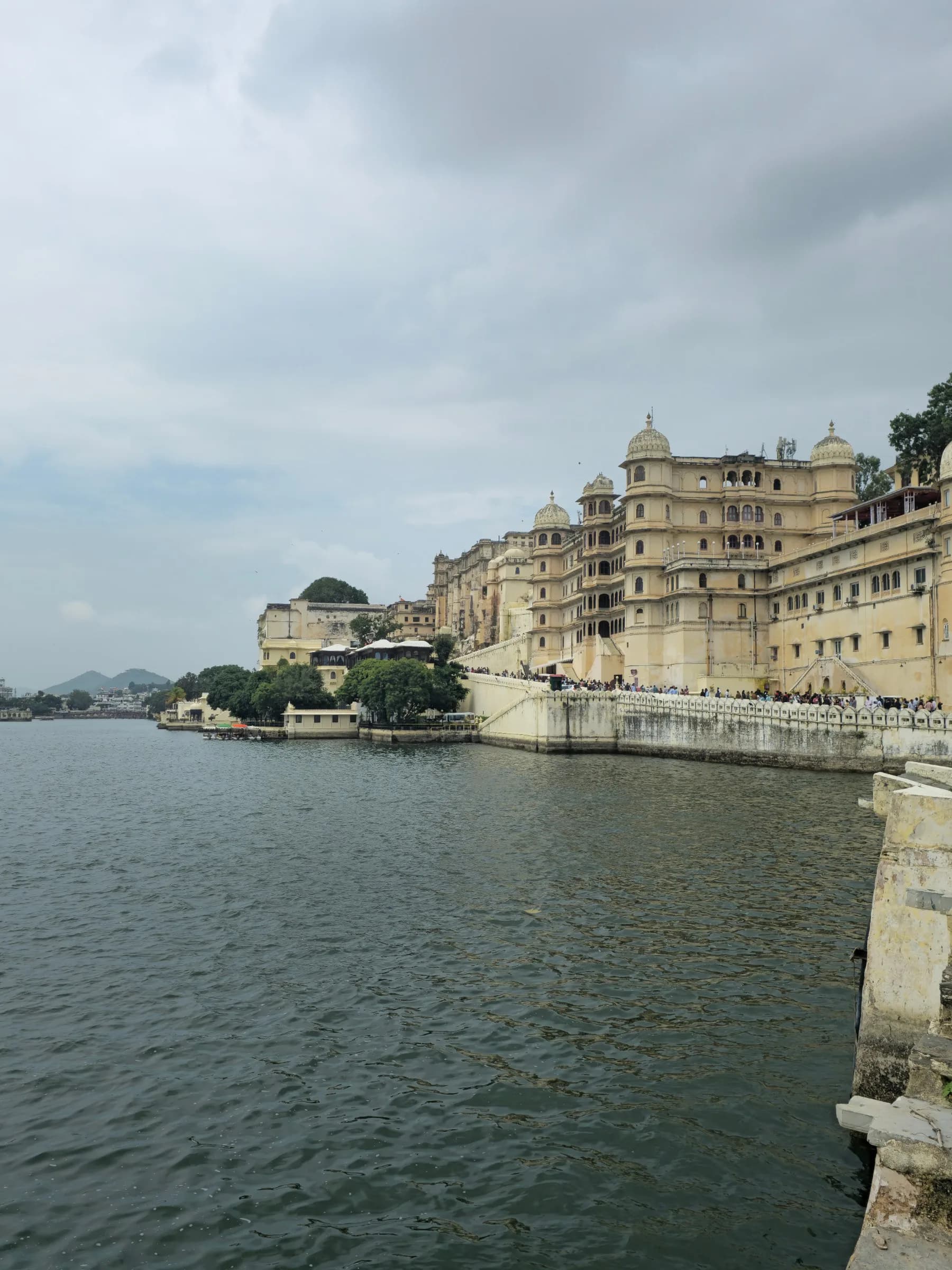
Udaipur is a city of about 700,000 in southern Rajasthan, roughly 660 km from Delhi, built in 1559 as the new capital of Mewar after the fall of Chittorgarh. It sits on the east shore of Lake Pichola in a ring of Aravalli hills, with the City Palace along the water, island palaces in the lake, and a white old town climbing behind. It is the most visually seductive city in Rajasthan and, in the old town at least, the most touristed per square metre. Both things are true.
How to reach Udaipur from Delhi NCR
By train
The Mewar Express leaves Hazrat Nizamuddin in the evening and reaches Udaipur around 7 am, about 12 hours, via Kota and Chittorgarh; the Chetak Express takes a similar overnight route from Delhi Sarai Rohilla. Sleeper to 2AC runs 400 to 2,000 rupees. This is how to do it for a long weekend: sleep through Rajasthan, wake at the lake. Udaipur City station is 3 km from the old town.
By car or motorcycle
Two routes. Via Jaipur: Delhi – Jaipur – Kishangarh – Bhilwara – Chittorgarh – Udaipur on NH48, about 660 km, 12 to 13 hours in a car with breaks. Break at Jaipur or Chittorgarh; the Chittorgarh fort is worth a morning on the way. Via the expressway: Delhi–Mumbai Expressway from Sohna to the Kota area, then Chittorgarh and Udaipur, faster for cars and closed to two-wheelers. On a motorcycle, two riding days each way via Jaipur, with the Chittorgarh to Udaipur stretch through the hills the reward.
By air
Direct flights from Delhi take about 90 minutes, 4,000 to 10,000 rupees, to Dabok airport 22 km east of the city. The sensible choice if the budget allows and the train times do not suit.
Best time to visit
Late September to November is the best: the monsoon has filled the lakes to the ghat steps, the hills are green, and the crowds have not yet peaked. Days of 28 to 32, nights of 15 to 20. December to February is peak season: cool, clear, expensive, and the old town is full. March is warm and fine, with Holi and the Mewar Festival at Gangaur. April to June is 38 to 42 degrees and the lakes can drop badly in a poor year; only for dawn, dusk and hotel pools. July to mid-September is monsoon: dramatic skies, the Monsoon Palace doing what it was built for, the lakes filling, and low prices; humid but underrated.
Where to stay
The old town: Lal Ghat, Gangaur Ghat, Jagdish Chowk
Havelis, guesthouses and boutique hotels stacked above the ghats, 1,200 to 12,000 a night, most with rooftop restaurants and lake views. You walk to everything and wake to the palace across the water. Lanes are too narrow for cars and noisy from rooftop music until 10 or 11. Choose a lane or two back from the ghat front for a quieter room at a lower price.
Fateh Sagar and the west bank
Hotels and a few heritage properties around Fateh Sagar lake and on the Pichola west bank near Ambrai, 3,000 to 15,000. Quieter, parking, ten minutes from the old town, and the Ambrai view of the palace from your side of the water.
Palaces and luxury
The Lake Palace on its island, the Shiv Niwas and Fateh Prakash inside the City Palace complex, and the big resorts on the outskirts, 20,000 upwards. If you are going to do it once in Rajasthan, the island is the one.
Budget
Hostels and cheap guesthouses around Jagdish Chowk and Hanuman Ghat from 400 a bed and 900 a room.
The palace and the lake
The City Palace museum opens at 9.30; give it a full morning with the audio guide. Skip the Crystal Gallery unless crystal furniture excites you. Walk out through the Jagdish temple, the 1651 Vishnu temple on the chowk with its carved plinth, and down to Gangaur Ghat for Bagore ki Haveli's museum. Book the golden-hour boat from Lal Ghat or a public jetty in the morning for a 4.30 or 5 pm slot; the palace's own jetty charges two to three times more for the same water. Dharohar at Bagore ki Haveli is at 7 pm; buy tickets in the afternoon. Dawn at Ambrai Ghat is free and the best photograph in the city.
Above the city
The Monsoon Palace, 5 km west through the sanctuary, an hour before sunset. Karni Mata temple on Machla Magra hill above Doodh Talai, by ropeway or steps, for a cheaper and closer version of the same view. Badi Lake, 12 km, for a dawn scramble up Bahubali hill or an afternoon chai on the dam. Fateh Sagar for an evening walk on the promenade; skip the boating and the Nehru Park island.
Kumbhalgarh and Ranakpur
The essential day out. Leave by 7.30, Kumbhalgarh by 9.30 for three hours on the walls and the Badal Mahal, lunch, Ranakpur by 1.30 when non-Jain visitors are admitted, an hour and a half in the pillared halls, and back to Udaipur by 6. About 230 km in a loop on hill roads that are among the best in Rajasthan for a motorcycle. A cab is 3,500 to 5,000 for the day. If you have the night, stay near Kumbhalgarh and walk the wall in the sanctuary at dawn.
Other trips
- Eklingji, 22 km north: the Mewar dynasty's own Shiva temple, 108 shrines, still in daily use; evening aarti is the time.
- Nagda, next to Eklingji: 10th-century Sahasra Bahu temples by a lake, carved and nearly empty.
- Chittorgarh, 115 km east: the original Mewar fort on a 180 m plateau with the Vijay Stambh, Padmini's palace and the Rana Kumbha ruins. A full day, or a morning on the way in by road.
- Jaisamand Lake, 50 km south-east: a 17th-century reservoir with marble dam and pavilions, one of the largest artificial lakes in Asia.
- Shilpgram, 3 km west: a crafts village that comes alive during its December fair and is quiet otherwise.
Food
Udaipur's own food is Mewari: dal baati churma at Natraj, the no-frills thali institution near the station, and at the Mewari places in the old town; laal maas and gatte at the rooftops; mirchi bada and kachori at the Jagdish Chowk stalls in the morning; lassi and kulfi at the old shops near the clock tower. The rooftop restaurants along the ghats do multi-cuisine at 500 to 1,200 a head with the palace lit across the water; one dinner there is worth it, three are not. Budget 150 to 300 for street meals and 400 to 800 for a good thali.
Getting around
The old town is on foot. Autos are plentiful and mildly overpriced; agree the fare. Scooters and motorcycles hire for 500 to 1,500 a day and are the best way to do the Monsoon Palace, Badi and Eklingji. A full-day cab for the Kumbhalgarh loop is 3,500 to 5,000. Cars cannot enter the ghat lanes; park at the City Palace lot or Gangaur Ghat parking.
How long to stay
Three nights in the city plus travel: a palace and boat day, a Kumbhalgarh and Ranakpur day, and a slow day of ghats, Monsoon Palace and Badi. A fourth night adds Chittorgarh or Eklingji and Nagda. With the train each way, four to five days from Delhi; by motorcycle via Jaipur, a week.
Practical notes
- Book the Mewar Express a month ahead for weekends.
- Buy Dharohar tickets in the afternoon; the 7 pm show sells out.
- Ranakpur admits non-Jain visitors only from around noon; plan the loop accordingly.
- Rooftop music runs late in the old town; ask about your room's position.
- ATMs, cards and network are fine everywhere.
- Lake levels matter; check the monsoon before booking a May trip.
Traps to avoid
- Boats from the City Palace jetty at two to three times the ghat price.
- The Crystal Gallery ticket.
- Saheliyon ki Bari and Gulab Bagh unless you have small children who need a garden.
- Fateh Sagar boating and Nehru Park.
- Miniature painting demonstrations that end in a showroom.
- Three rooftop dinners in a row.