
How to do Alwar from Delhi NCR: the short drive and the train, when to go, where to stay from lake palace to hill fort, Bala Quila, the chhatri, Sariska safari booking, Siliserh, Bhangarh, the kalakand, costs and why it beats driving past to Jaipur.
Alwar in brief
Alwar is a city of about 350,000 in north-eastern Rajasthan, roughly 160 km from Delhi, in a bowl of Aravalli hills at the edge of the old Mewat region. It was the capital of a princely state founded in 1775 by Pratap Singh, a Kachwaha Rajput, and it kept the fort, the palace and the hunting grounds that came with that. Today it is a district town that most Delhi traffic passes on the way to Jaipur, with a heritage core, a lake palace, a tiger reserve and a sweet that people drive here specifically to buy.
How to reach Alwar from Delhi NCR
By car or motorcycle
The classic route is Delhi – Gurugram – Sohna – Bhiwadi – Tijara – Alwar, about 160 km and 3.5 to 4 hours, on a mix of good state highway and slower stretches through Bhiwadi's industrial sprawl. The Delhi–Mumbai Expressway from Sohna has exits for the Alwar side and cuts the time for cars to about 3 hours via the Dausa road connectors; two-wheelers are not allowed on the expressway and take the Sohna–Bhiwadi road. From Gurugram it is an easy day trip; from east Delhi add an hour. Tolls are modest on the old road and around 300 to 400 on the expressway.
By train
Alwar is on the main Delhi–Jaipur line and has excellent connections: the Shatabdi, Vande Bharat and a dozen express trains stop here, 2.5 to 3 hours from New Delhi or Delhi Cantt, 150 to 700 rupees. The station is 2 km from the City Palace. For a day trip or a car-free weekend this is the easiest option.
By bus
Rajasthan Roadways and private buses from Dhaula Kuan, Sarai Kale Khan and Gurugram run through the day, 4 to 5 hours, 200 to 400 rupees.
Best time to visit
November to February is ideal: mornings of 6 to 12 degrees on the fort ridge, afternoons of 22 to 26, mustard fields in flower around Kesroli in January, and Sariska at its most comfortable. October and March are warm and fine. April to June is 38 to 44 degrees; the city is only for dawn and dusk, but Sariska sightings are at their best as animals crowd the water points, and the safari at 6 am is still good. July to September is monsoon: Sariska closes, the hills go green, Siliserh fills, and the fort in cloud is lovely if you can bear the humidity.
Where to stay
In the city
Mid-range hotels and a couple of converted havelis near the Hope Circus, the station and the Company Bagh, 1,500 to 5,000 a night. Walking distance to the palace and the chhatri, 20 minutes from the fort road. Practical and unglamorous.
Siliserh Lake Palace
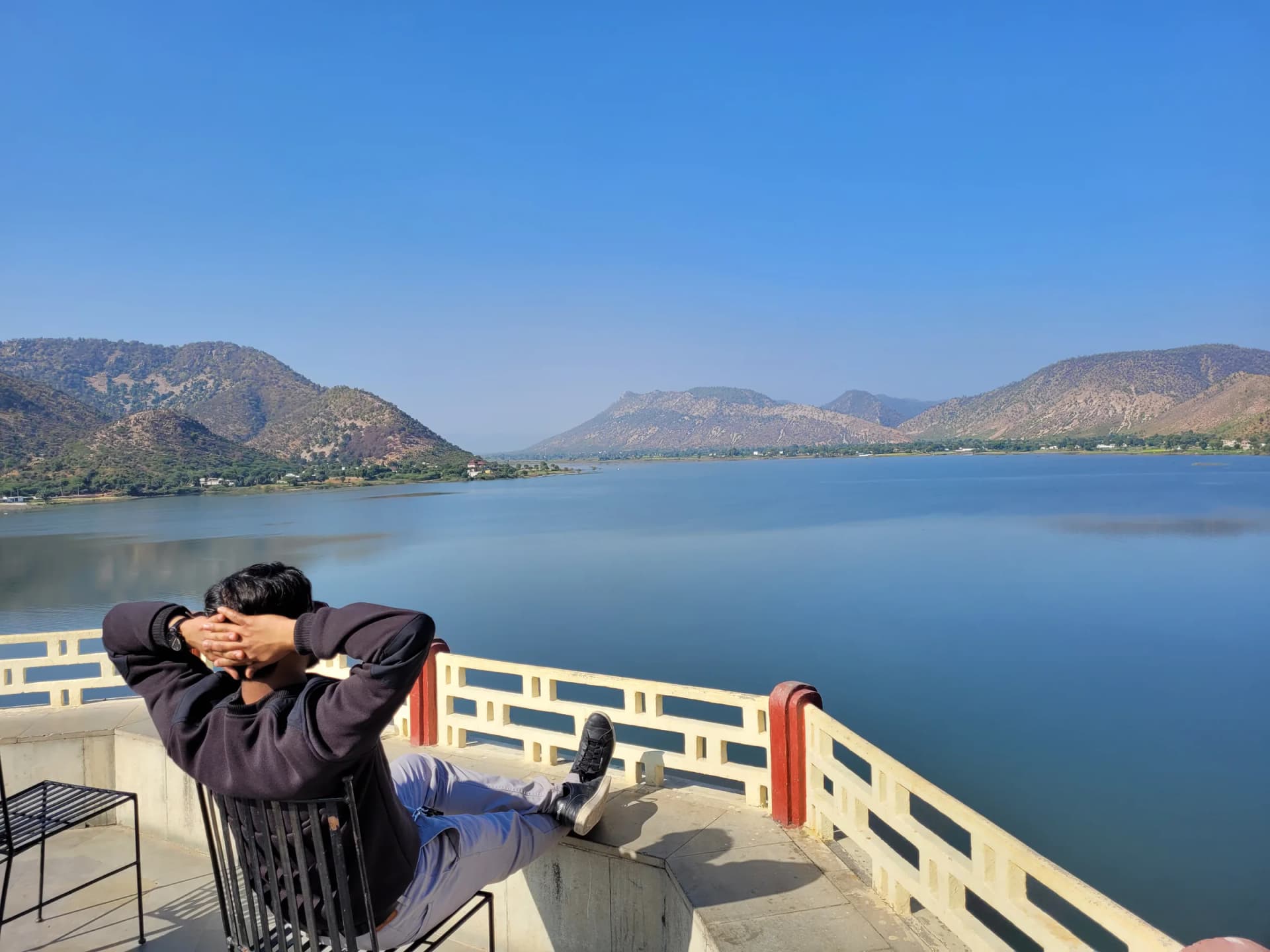
The Rajasthan tourism heritage hotel in the 1845 hunting lodge on the lake, 3,000 to 6,000 a night. Faded rooms, superb setting, sunset from your terrace. Book the lake-facing rooms.
Kesroli and the heritage forts
Kesroli Hill Fort 12 km out, and a couple of other restored forts and havelis in the district, 6,000 to 15,000. The full Rajasthan experience at a third of Jaipur prices.
Sariska
Resorts and camps along the Alwar–Jaipur road near the reserve gate, 3,000 to 20,000, from basic to luxury. Stay here if the safari is the point and you want the 6 am gate without a 35 km drive.
The heritage core
Start at the City Palace and its Government Museum on a weekday morning, an hour for the miniatures, manuscripts and the silver table; closed Fridays. Walk out the back to Moosi Maharani ki Chhatri and the Sagar tank and give it 45 minutes; this is the best building in Alwar. Then the 5 km road up to Bala Quila, ideally at dawn before the museum rather than after; the walls, the gates and the view over the plains are best before 9. Hope Circus, the old market roundabout, has the kalakand shops and the Company Bagh with its Purjan Vihar summer house.
Sariska: how to actually see it
Book jeep or canter safaris online through the Rajasthan forest department portal at least a week ahead for weekends and a few days for weekdays; walk-up slots at the gate are rare in season. Morning safaris leave around 6.30 to 7 in winter and 6 in summer; afternoon around 2.30 to 3. A jeep is 3,500 to 5,000 for six plus the guide and entry, a canter seat is around 500 to 800. Zones one and two from the Sariska gate are the tiger core; the Tehla gate on the far side is quieter. Tuesdays and Saturdays the Pandupol temple road is open to pilgrim vehicles, which is not a safari and is chaotic, but does put you inside the reserve for free.
Siliserh, Kesroli and the roads
Siliserh is 13 km south-west through low hills: boating in the morning, chai on the palace terrace at sunset. Kesroli is 12 km north-east through fields: the fort ramparts for a fee or a meal. The roads between Alwar, Siliserh, Sariska and the villages of the Aravalli edge are empty, well surfaced in most places, and made for a motorcycle. A loop of Alwar – Kesroli – Tijara Jain temple – Alwar – Siliserh – Sariska road – Alwar is a fine day's riding.
Bhangarh and beyond
Bhangarh is 85 km past Sariska, a complete ruined 17th-century town with temples, a market street and a palace against the hill, and a ghost legend that brings bus groups on weekends. Go on a weekday morning, with Ajabgarh fort 10 km further for even fewer people. Neelkanth, 11th-century Shiva temple ruins on a hill inside Sariska reached by a separate road, is 45 km from Alwar and rewards the effort.
Food and the kalakand
Alwar's kalakand is a grainy, barely set milk sweet made by reducing milk with a little alum and sugar, and the old shops around Hope Circus have been making it for over a century. Buy it in the evening when the day's batch is fresh, eat it within a day, and take a kilo home in the box. Beyond that, Alwar eats Rajasthani thalis, kachori and mirchi bada at the market stalls, and decent North Indian at the hotels. Nothing to plan a trip around except the sweet.
Getting around
Autos are plentiful and cheap in the city. A cab for a Sariska or Siliserh half-day is 1,500 to 2,500. Motorcycles and scooters are not widely hired here; bring your own or use cabs. The fort road is fine for two-wheelers and small cars.
How long to stay
A day trip from Gurugram covers Bala Quila, the museum, the chhatri, kalakand and Siliserh at sunset. One night adds a Sariska morning safari. Two nights adds Bhangarh, Kesroli and a slow afternoon at the lake. It is very hard to spend more than three days here and there is no reason to.
Practical notes
- Book Sariska online in advance. This is the single most common way an Alwar weekend goes wrong.
- The museum is closed on Fridays and government holidays.
- Carry water on the fort; there is nothing up there.
- ATMs, cards and network are fine in the city; carry cash for Sariska and the villages.
- The Sohna–Bhiwadi road has bad stretches and heavy trucks; two-wheelers should not ride it after dark.
Traps to avoid
- Turning up at the Sariska gate on a Saturday without a booking.
- Bala Quila at noon in any month.
- Bhangarh on a weekend with the ghost-hunting bus groups.
- Buying kalakand from the highway stalls instead of the Hope Circus shops.
- Driving past to Jaipur, again.