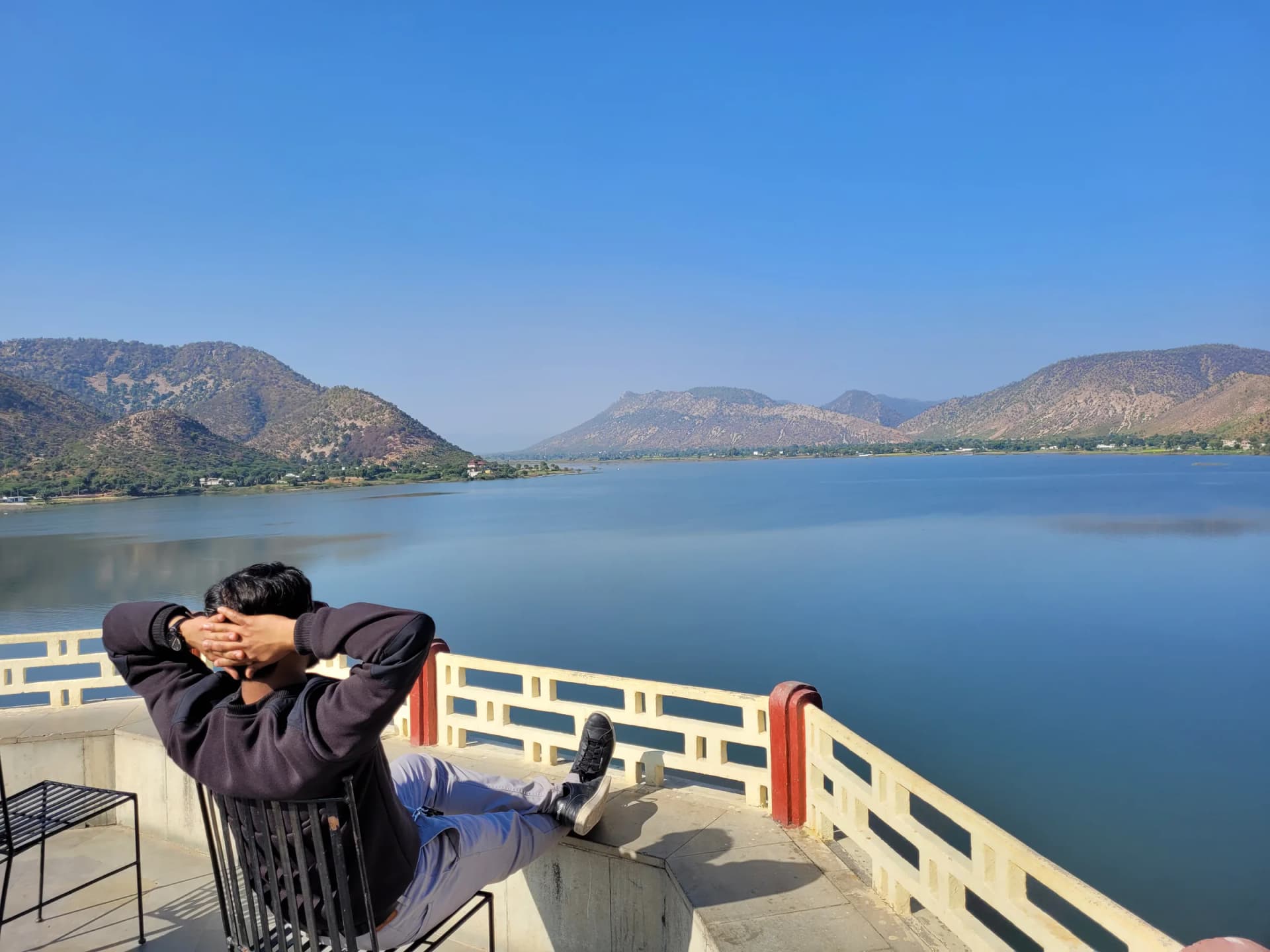
Gonbo Rongjon is a mountain that looks like it was put there. It stands alone on the floor of the Lungnak valley in southern Zanskar, a fluted pyramid of pale rock about 800 metres high with nothing attached to it, the valley wide and flat on every side and the peaks of the Great Himalaya well back behind. The Zanskaris call it Gonbo Rangjon, the self-arisen Mahakala, and treat the whole mountain as the protector deity's body: pilgrims circumambulate it, prayer flags and chortens ring its base, and the villagers of Kargyak, a few kilometres up the valley, do not climb it. It is the most extraordinary single object I have seen from a road in India.
The road is the point. Until a few years ago, Gonbo Rongjon was a week's trek from Darcha over the Shinkula pass. The Border Roads Organisation has since pushed a road over Shinkula at 5,091 metres and down the Lungnak valley to Padum, and the mountain is now a stop on one of the great new motorcycle routes in the Himalaya: Manali to Padum via Darcha, Shinkula, Lakhang, Kargyak, Purne and the Phuktal turn-off, roughly 300 km of unsurfaced and half-surfaced road that is open from about mid-June to October. It has its own page in this series; so does Shinkula. This one is about the rock.
Getting here from Delhi is a thousand kilometres and at least five days of riding: two to Manali, one to Jispa or Darcha at 3,300 metres to acclimatise, one over the pass to Kargyak, and a day for the mountain before Padum or the return. There is no fuel between Keylong and Padum, no network beyond BSNL in Kargyak on a good day, no hotel within 70 km, and an altitude of 4,200 metres at the base that treats the unacclimatised badly. Kargyak, the highest village in Zanskar, has homestays and is where you sleep; the base has campsites and is where you sit at dawn.
Gonbo Rongjon suits experienced riders and drivers who have done Ladakh's main roads and want the one nobody has, photographers, anyone with a week and a tolerance for dust, cold and no signal, and anyone who wants to see a mountain that a valley worships. It suits nobody in a hurry, nobody who has not slept two nights above 3,000 metres first, and nobody without spare fuel.
My take: acclimatise at Jispa, cross Shinkula early, sleep at a Kargyak homestay, and be at the base of the rock 45 minutes before sunrise. Walk the kora if you have a day. Carry ten litres of petrol from Keylong because the pumps stop there and the black-market bottles at Purne cost what you would expect. I did not, and this is that story.